
2018 Awards
Acorn Foundation Fiction Prize

The New Animals
Published by: Victoria University Press

Pip Adam
In this strange, confrontational, revelatory novel that holds a mirror up to contemporary New Zealand culture, Pip Adam gets beneath the skin of her characters in ways that make you blink, double-take, and ultimately reassess your sense of the capabilities of fiction. It’s so vivid in imagery and imagination that it lingers in the mind, and a transition late in the novel is both wholly unexpected and utterly satisfying.

Salt Picnic
Published by: Victoria University Press

Patrick Evans
This complex, insightful and superbly written novel about the slippery bond between language and reality is an imaginative response to the five months Janet Frame spent in Ibiza in 1956. Its inventive grasp of the island and the characters is phenomenal, and the narrative voice remarkably adroit. Patrick Evans has had a decades-long interest in Frame as a modernist writer, and the Frameish notion that language can make things appear and suddenly disappear makes Salt Picnic a powerful conclusion to his Frame trilogy.
Sodden Downstream
Published by: Lawrence & Gibson Publishing

Brannavan Gnanalingam
A simple premise goes a long way in Sodden Downstream, a linear narrative developed with wonderful tonal control. The empathy with which Brannavan Gnanalingam creates his characters—from the heroine Sakt to the assorted misfits and samaritans she meets on her epic journey—is balanced throughout by a clear, sustained note of anger. The novel reveals New Zealand lives we seldom see in literary fiction and offers a perspective from the economic and social margins that feels enormously timely.

Baby
Published by: Victoria University Press

Annaleese Jochems
A savagely funny and daring debut, this novel shimmers with feverish, fatalistic intensity. Baby is a strange and strangely moving love story built on obsession, narcissism and damage. Annaleese Jochems writes with uncanny insight and skill as well as with a raw and urgent power: her characters take the reader on an unpredictable ride in which it’s unclear who’s in control until the very end.
Poetry Award
Anchor Stone
Published by: Cold Hub Press

Tony Beyer
Tony Beyer’s Anchor Stone is a considerable achievement. The poems reach out to the reader directly, and articulate a humanist vision. There is consistently a fine clarity in Beyer’s use of language, in particular of imagery and tonal colour. He responds to the relationship between the natural world and ourselves and excels at making the local, immediate world around us turn to and into deeper moments of experience

Night Horse
Published by: Auckland University Press

Elizabeth Smither
These are the poems of a first-rate poet at work, using her knowledge, long experience—this is Elizabeth Smither’s eighteenth collection of poetry—and practice of the craft of poetry to great advantage. As a whole Night Horse is a stimulating, thoughtful and pleasurable read, and it is distinctive for the way in which Smither consistently makes poems that get ‘lifted into the light’.

Rāwāhi
Published by: Anahera Press

Briar Wood
With a highly tuned lyric voice, Briar Wood demonstrates how poetry can ‘make intimate everything that it touches’, enabling the reader to engage at an emotional and feeling level. A fine image maker, Wood time and again composes poems that express how the truth of the imagination can be discovered and enacted in a language rich with lyricism and cultural reference.

The Yield
Published by: Otago University Press

Sue Wootton
Sue Wootton takes an ordinary, familiar experience and/or object and imaginatively transforms it into something other, deeper in thought and larger in meaning. In a number of poems she shows a clear awareness of and concern for our relationship to the natural world [in crisis/crises]. She brings us the light and the dark of human experience, often divided of itself, seeking balance and reconciliation.
Illustrated Non-Fiction Award
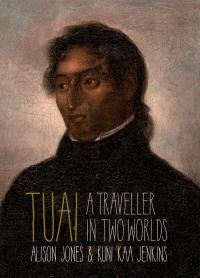
Tuai: A Traveller in Two Worlds
Published by: Bridget Williams Books


Alison Jones and Kuni Kaa Jenkins
Tuai: A Traveller in Two Worlds presents an evocative picture of young Māori travelling to England, their encounters with people, illness and industry there, and their return home. Tuai is empathetically written, deftly allowing the reader a window into this contested time of encounter, conversion and enterprise as people met, traded, interacted and travelled. The text and illustrations work in concert, presenting a rounded and rich experience for the reader, enhancing the breadth and depth of the research explored within.

Tōtara: A Natural and Cultural History
Published by: Auckland University Press

Philip Simpson
The significance of tōtara to tāngata whenua sets the scene for Tōtara: A Natural and Cultural History. Tōtara is engagingly written, and contains a great breadth of content, spanning taxonomy to cultural history. Philip Simpson covers the tree’s place within the wider podocarp whānau, its importance to Māori, then settlers, and the enduring place it holds within Aotearoa. The illustrations are varied, signalling the variety of communities that the book represents: sleek photography, handy infographics, and amateur photography. Like the tree itself, this book will be a long-lasting resource.
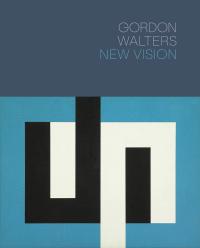
Gordon Walters: New Vision
Published by: Auckland Art Gallery Toi o Tāmaki and Dunedin Public Art Gallery


Zara Stanhope (Commissioning Editor), Lucy Hammonds, Laurence Simmons and Julia Waite
This generously illustrated and beautifully designed book provides a close examination of the work of one of New Zealand’s major artists. Nine authors in eight chapters help us see Gordon Walters with the ‘new vision’ of the title. An artist engaged in international art explorations as well as drawing on his home environment, Walters’ abstraction explored ‘the tension between interconnected forms’. Readers will come to a new appreciation of the deep currents of the art world to which Walters was responding with dedication and great refinement.

The Face of Nature: An Environmental History of the Otago Peninsula
Published by: Otago University Press

Jonathan West
Through an in-depth case study of the Otago Peninsula, The Face of Nature charts human impact on the environment. From its occupation by Southern Māori from the late thirteenth century, a place rich in seabirds, seals, whales and fish successively became a hunting ground and then farmland. In this superb local history, Jonathan West pulls the reader into a much larger story about resource use and colonial capitalism. The beautifully produced illustrations serve to enhance the reader’s understanding of the impact of settlement.